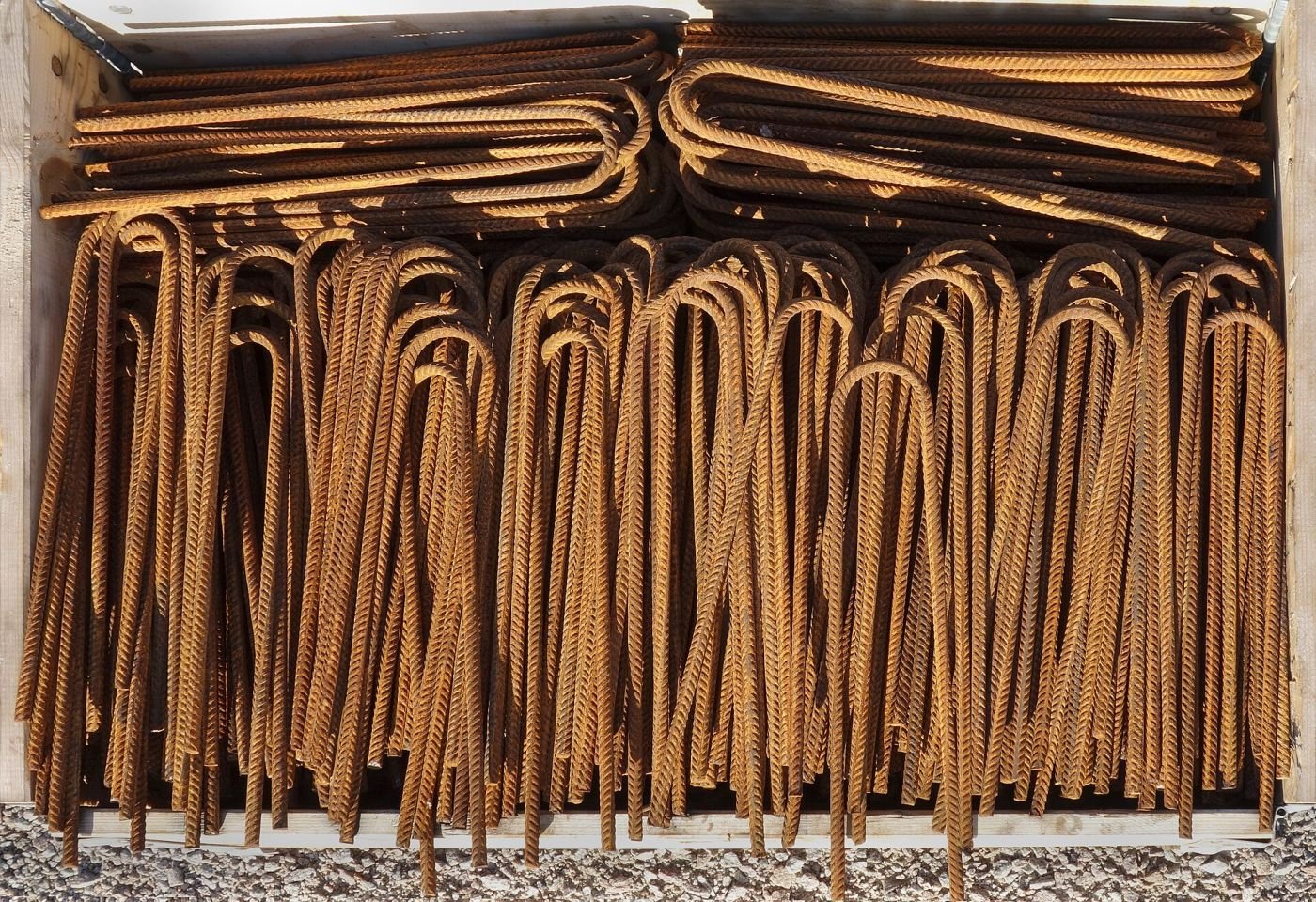

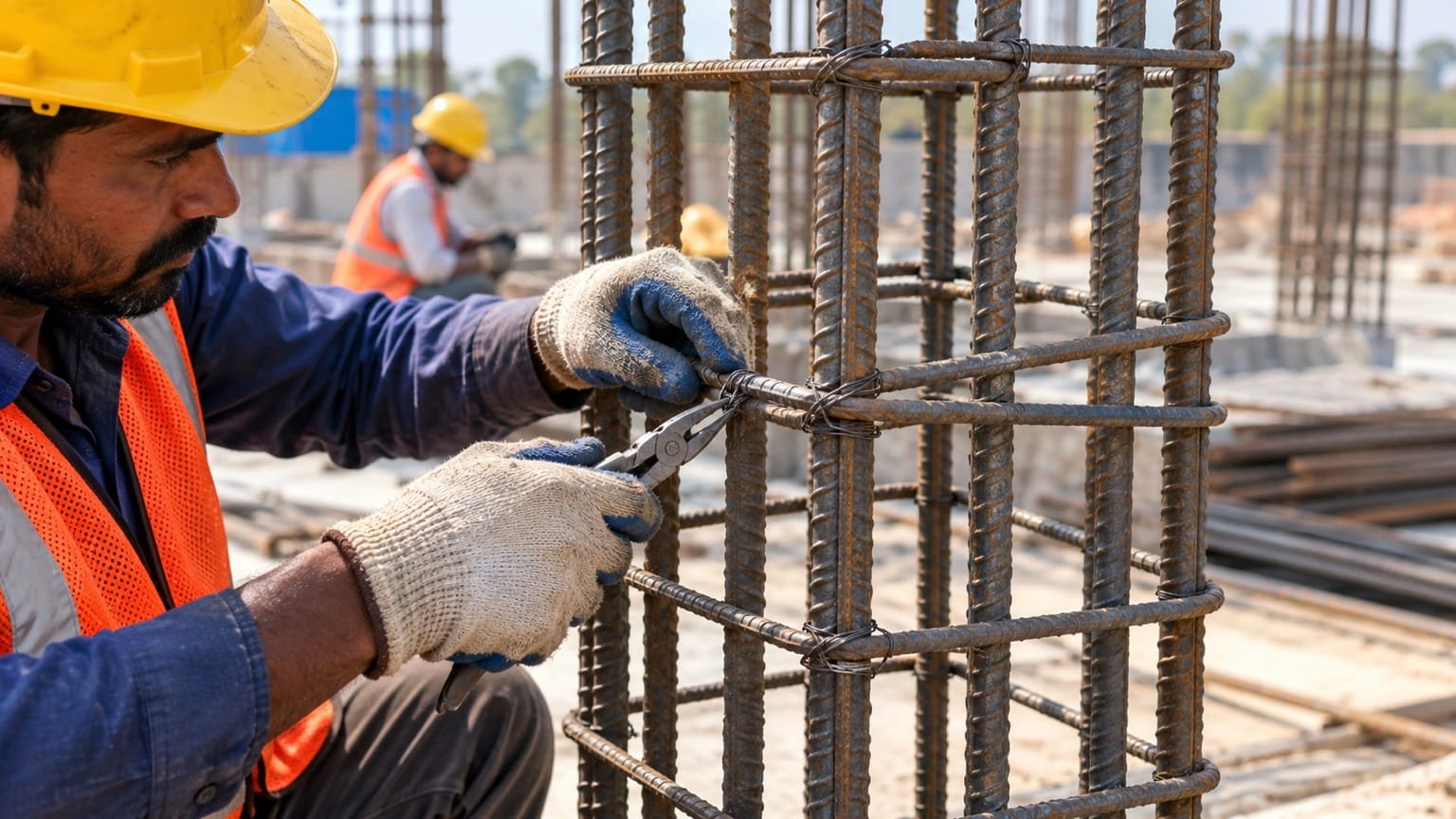
Stirrups and rings hold the main bars of a beam or column in place and resist shear. On small and mid-size sites in Chhattisgarh two materials are commonly used for them: Torkari, the thin ribbed ring bar in 5 and 5.2 mm, and plain mild steel (MS) round bar in 6 mm. They look similar on the bending bench but behave differently in the concrete.
What Torkari is
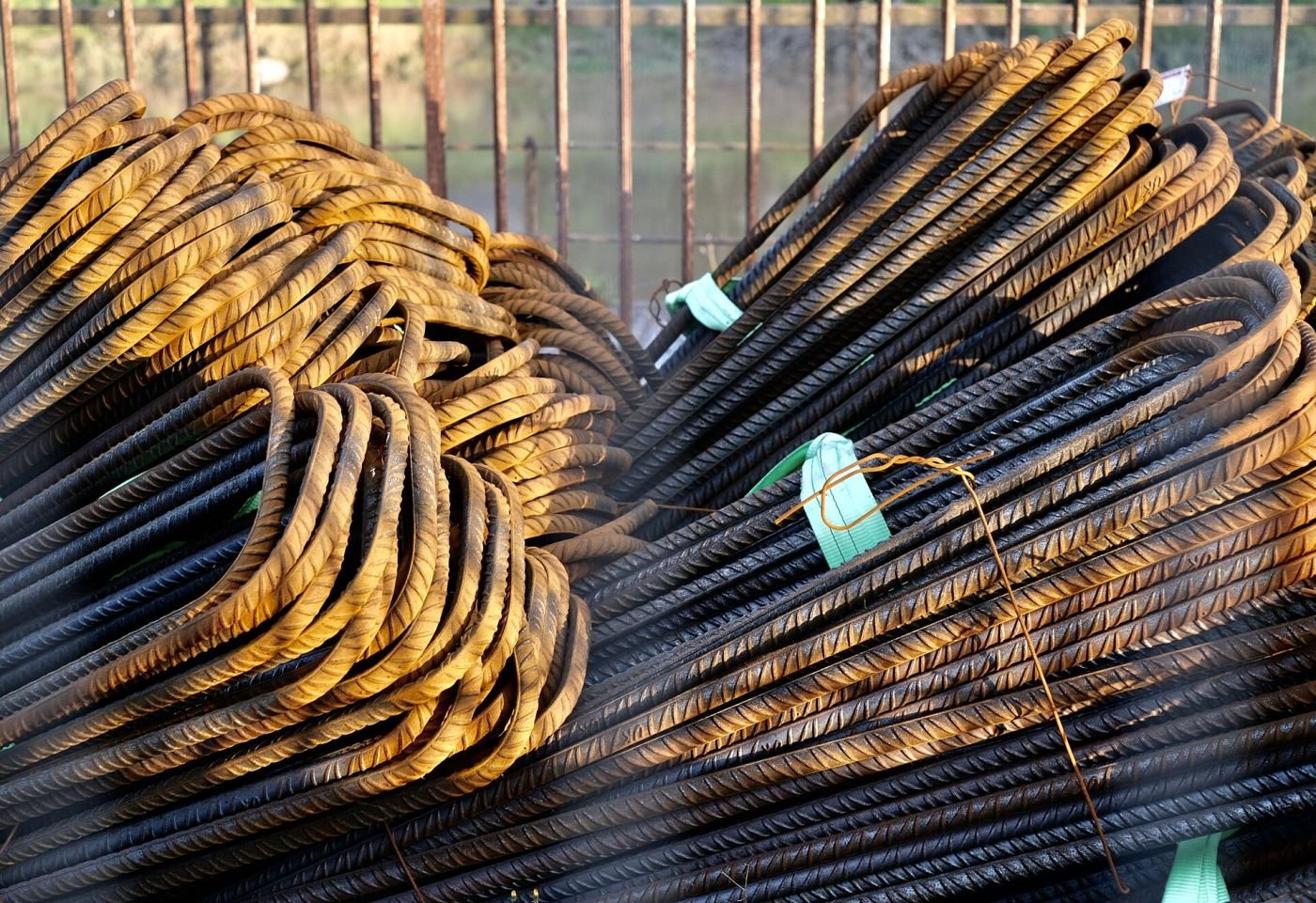
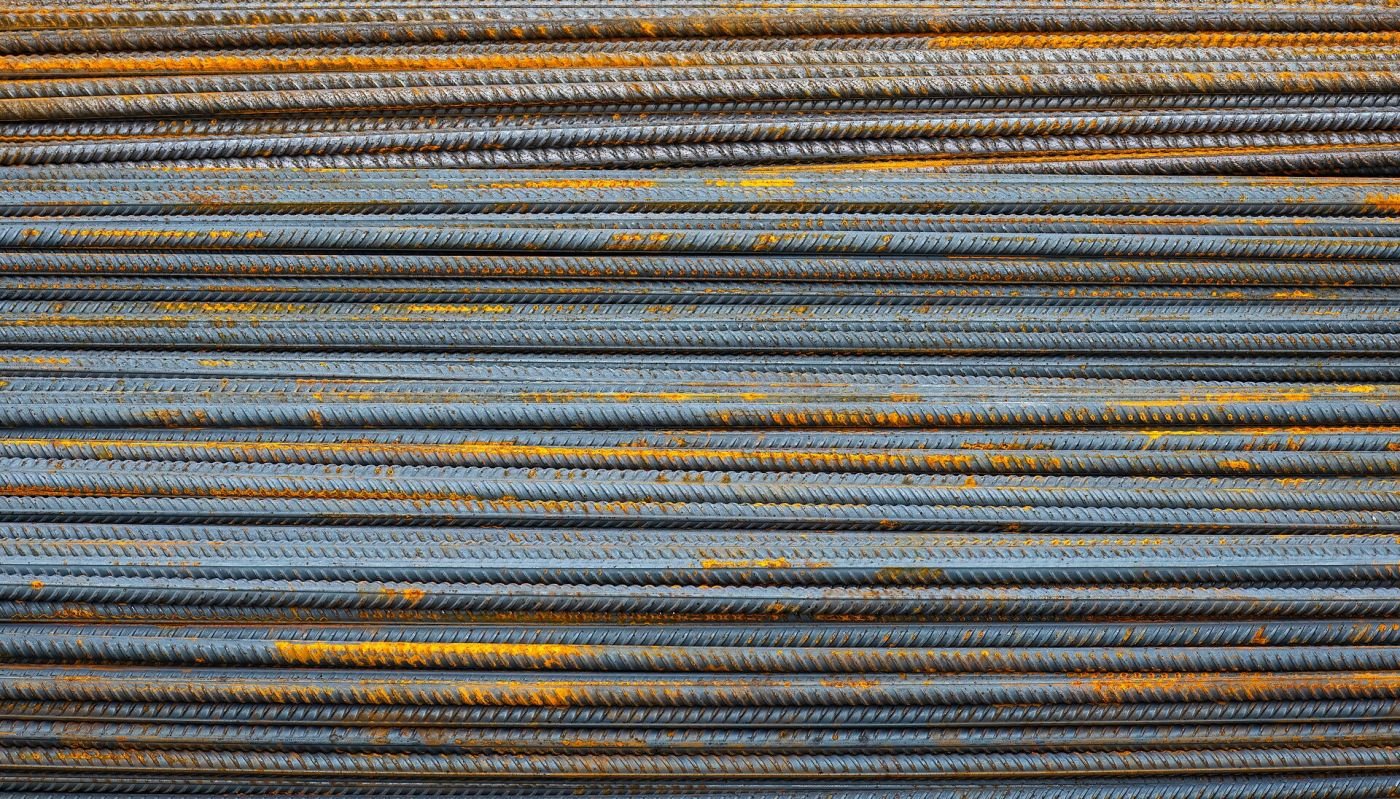
Torkari is a cold-worked, ribbed bar produced from wire rod. The ribs give it a mechanical grip on concrete similar to a deformed bar, and the cold working raises its yield strength above that of plain mild steel of the same diameter. It is sold in coils or, from processors like us, straightened and cut to the ring length.
What plain MS bar is
Plain round bar is hot-rolled mild steel with a smooth surface. Its grip on concrete comes only from friction and the hooks at the ends of the stirrup, so the hooks must be formed correctly and the bar needs a slightly larger diameter to do the same job.
Grip and strength
- Bond: the ribs on Torkari lock into the concrete; plain bar relies on hooks.
- Yield strength: cold-worked Torkari is stiffer and stronger per millimetre than plain MS, so a 5.2 mm Torkari ring often replaces a 6 mm plain ring.
- Bending: both bend easily by hand tools; Torkari holds its shape better once bent.
Cost and wastage
Because Torkari is lighter per metre (0.167 kg/m for 5.2 mm against 0.222 kg/m for 6 mm plain), the same number of rings uses about 25 per cent less steel by weight. Buying it straightened and cut to length also removes the coil ends and bad cuts that happen on site.
When to use which
For structural stirrups in beams and columns, use Torkari (or TMT 8 mm where the design calls for it). Plain MS bar is fine for non-structural ties, spacers and temporary work. If an engineer has specified the stirrup bar, follow the drawing.
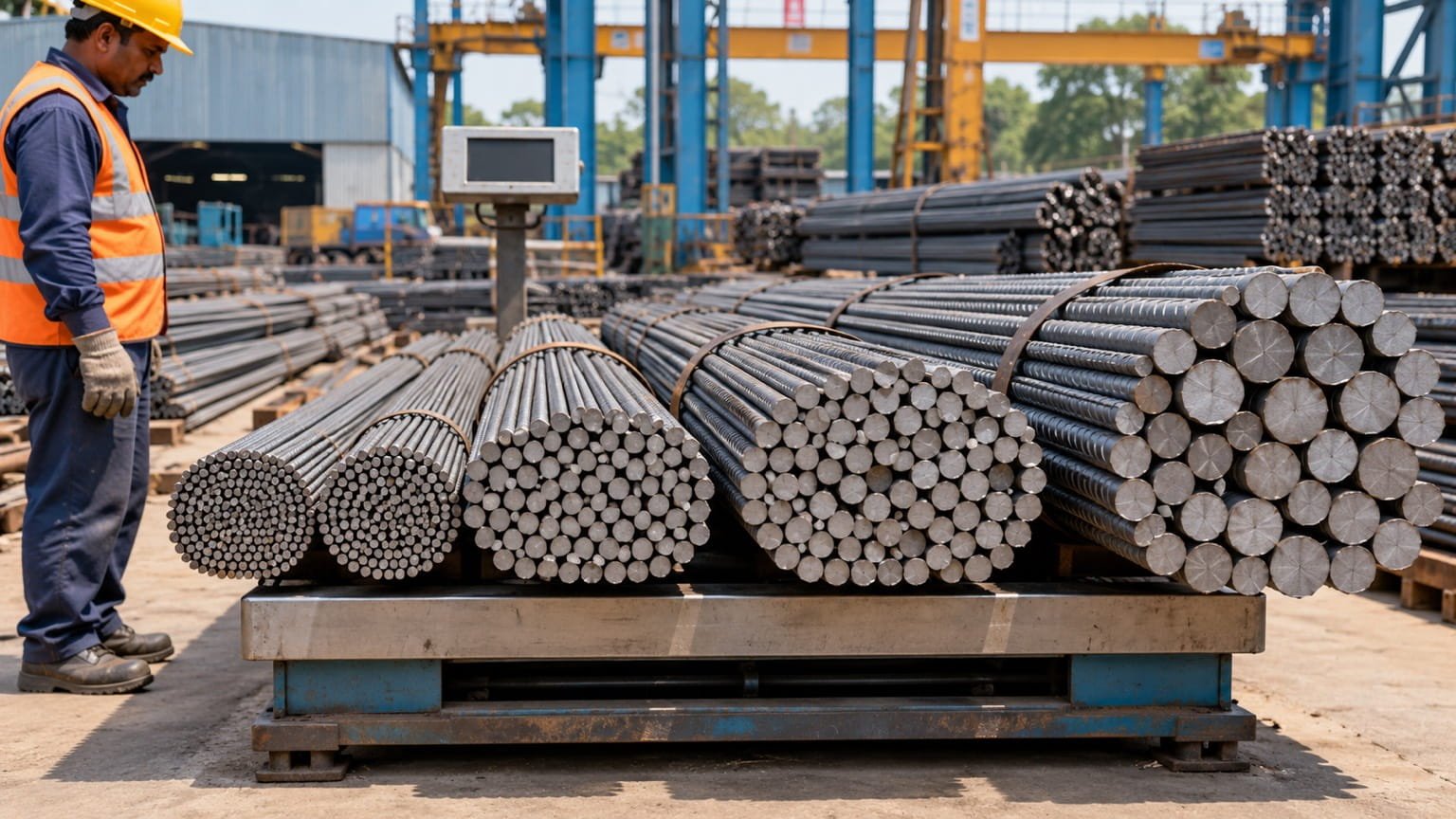
M2C makes Torkari in Bhilai and supplies it in coils or cut to length. Ask for today's rate or work out the weight you need.