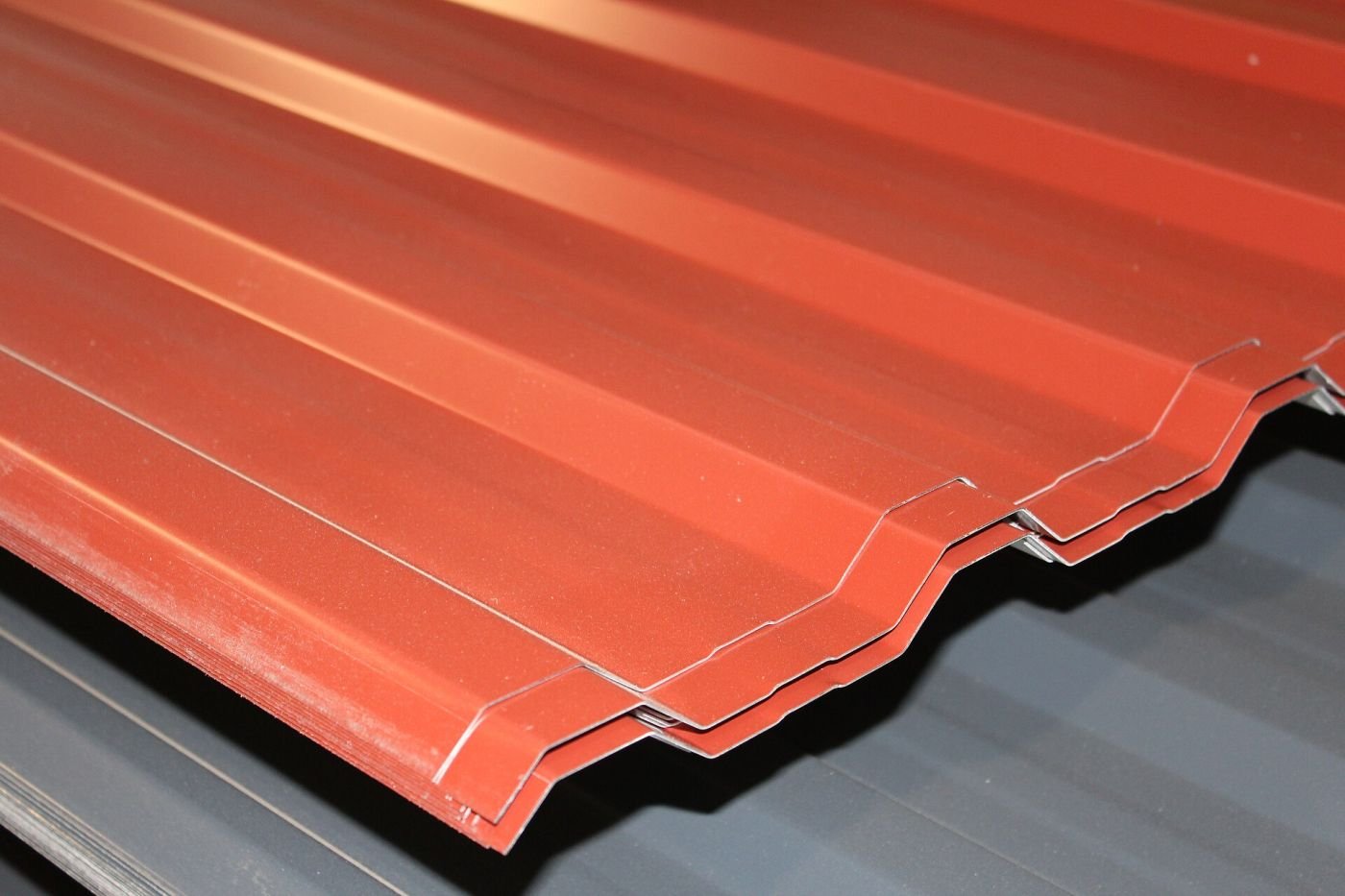

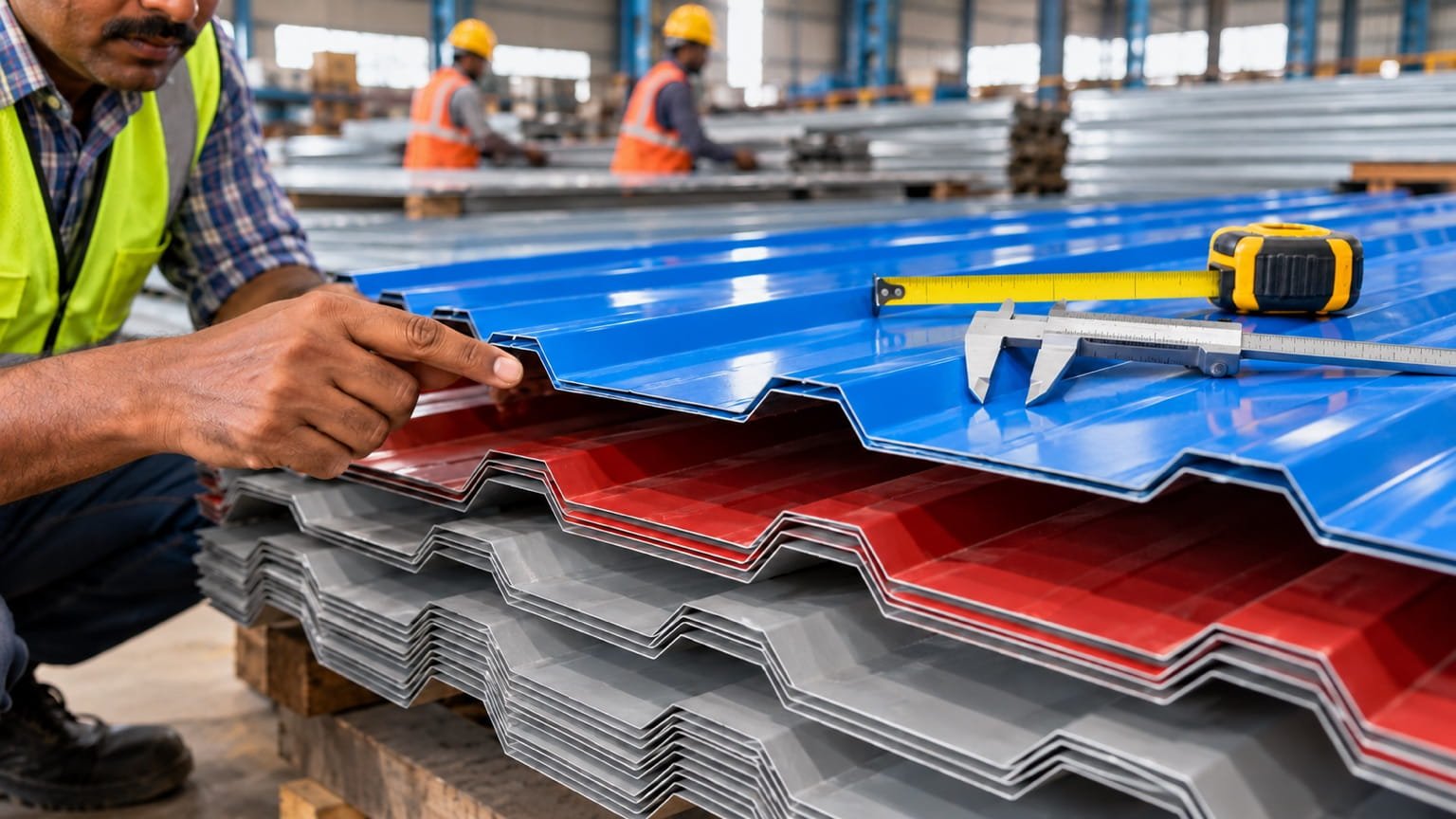
Metal roofing sheets are sold by base-metal thickness, from 0.30 mm up to 0.50 mm. Thicker sheets cost more per square metre but span further between purlins, dent less and last longer. Choosing well means matching thickness to the building, not simply picking the cheapest or the heaviest.
Thickness by use
| Thickness | Typical use |
|---|---|
| 0.30 mm | Temporary sheds, boundary cover, low-cost cattle sheds |
| 0.35 mm | Sheds, small godowns, cattle sheds |
| 0.40 mm | House and shop roofs, small godowns |
| 0.45 mm | Industrial sheds and warehouses (the most common choice) |
| 0.50 mm | Long spans, heavy industrial use, high-wind sites |
Purlin spacing matters
A thin sheet on widely spaced purlins will sag and flutter in wind. As a rule of thumb, 0.35 mm sheets want purlins about 1 m apart, 0.45 mm sheets can go to 1.5 m, and 0.50 mm a little further. If the purlins are already in place, let the spacing guide the thickness.
Colour-coated or galvalume?
Both start as galvalume (aluminium-zinc coated) steel, which resists rust far better than plain galvanised sheet. Colour-coated sheets add a baked paint layer in your choice of colour and reflect more heat. Plain galvalume keeps the silver finish and costs less, which suits back-of-house roofs and sheds.
Length and joints
Sheets roll-formed locally can be cut to the slope length, so there is no joint between eave and ridge for anything up to about 40 ft. Fewer joints mean fewer leaks. Where a slope is longer, a 150 mm end lap is used.
Estimating quantity
Divide the ridge length by the effective cover (1000 mm for a standard 1050 mm sheet), round up, and multiply by the number of slopes. Add about 5 per cent for cutting. Our roofing sheet estimator does this and adds the weight.